MacroSnaps27 September 2026
No. 78Video games earn nearly three times as much as every cinema ticket and every record sold on earth, combined.
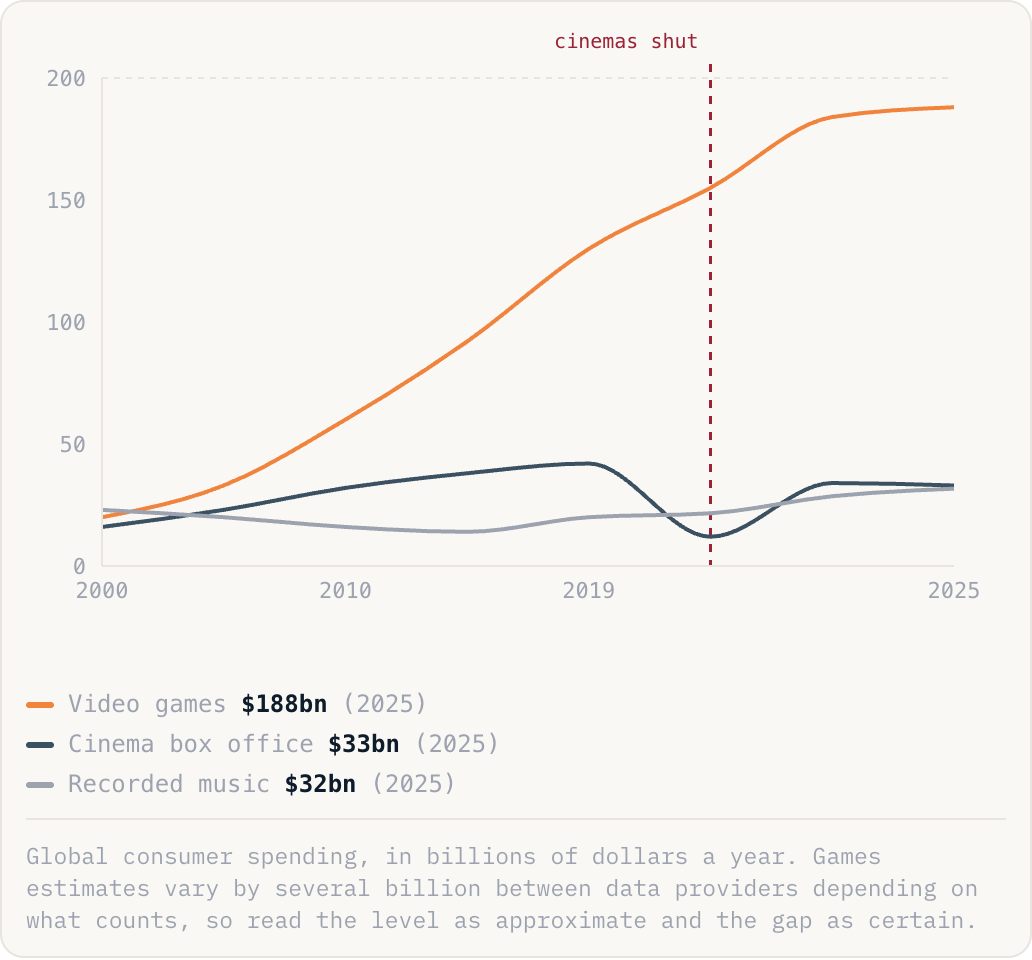
Video games$188bn(2025)Cinema box office$33bn(2025)Recorded music$32bn(2025)
Global consumer spending, in billions of dollars a year. Games estimates vary by several billion between data providers depending on what counts, so read the level as approximate and the gap as certain.
Why this is happening
- The business model changed underneath the medium. A film sells you one ticket and an album sells you one copy, but a free game can sell nothing at the door and then take money continuously from the fraction of players who spend, which is where most of the industry's revenue now comes from.
- Mobile did the scale. Roughly half of all games revenue is now phones, which put a games platform in the pocket of billions of people who would never have bought a console.
- And games are the only one of the three that is not really competing for a seat or a stereo. They compete for hours, and they are unusually good at holding them, because the product is designed to be played rather than watched once.
The take
The cultural coverage is upside down: film and music get the newspapers, the awards and the front pages, while the biggest entertainment industry on the planet is treated as a niche. It matters beyond culture, because games are where the money is that pays for graphics chips, real-time physics and virtual worlds. The technology now being repurposed for artificial intelligence and simulation was largely funded by people buying games.
Source: Newzoo, Comscore, IFPI (2026)