MacroSnaps12 October 2026
No. 93Almost all the wealth humanity has ever produced was created after 1950.
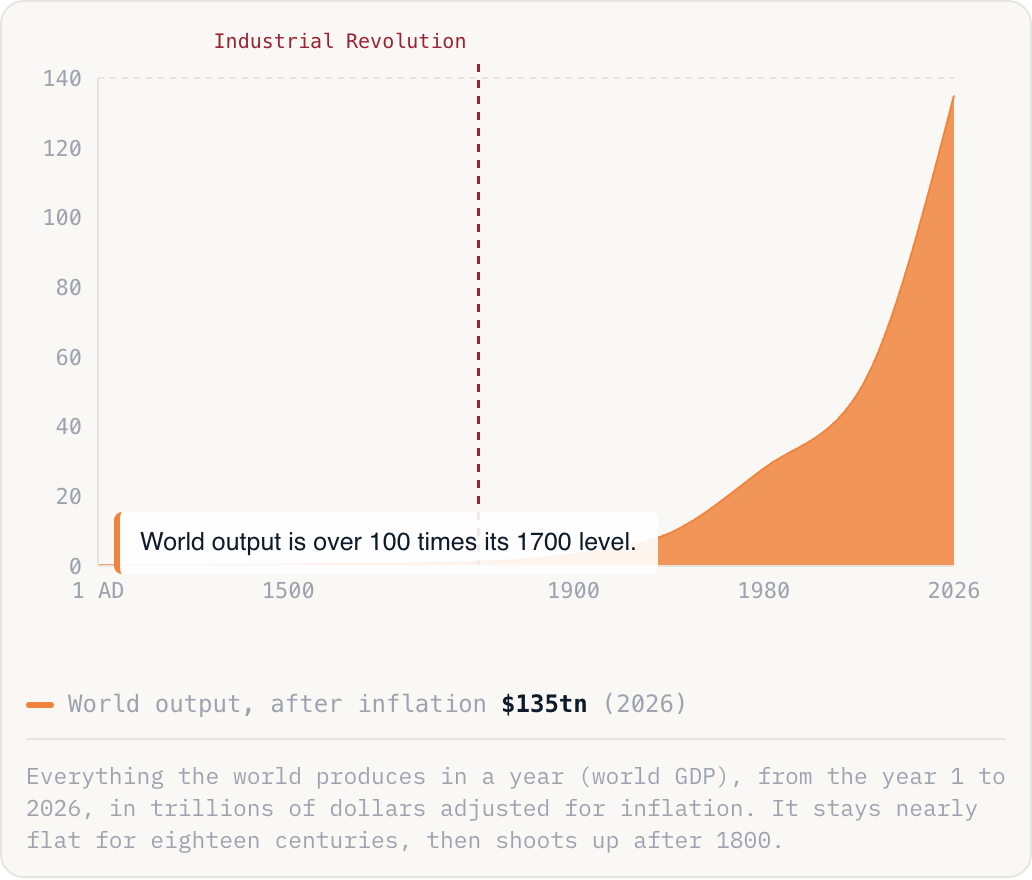
World output is over 100 times its 1700 level.
World output, after inflation$135tn(2026)
Everything the world produces in a year (world GDP), from the year 1 to 2026, in trillions of dollars adjusted for inflation. It stays nearly flat for eighteen centuries, then shoots up after 1800.
Why this is happening
- Factories and machines, from the late 1700s, let each worker produce far more. Before that, economies grew only by adding people; afterwards, people themselves got richer.
- Growth builds on itself, like interest on savings. At 3% a year output doubles about every 24 years, and each doubling adds more than everything before it. That is why the line is flat for centuries, then almost vertical.
- After 1950, factories, electricity and trade spread across Asia, bringing billions of people into modern work at once.
The take
For most of history, the average person lived about as well as their grandparents had. Rising living standards are a recent invention, about two centuries old, and nothing guarantees they last: without growth, this chart would be almost flat.