MacroSnaps12 November 2026
No. 124Young graduates in America and Britain used to be less likely to be out of work than the average worker. Since 2019 they have been more likely, in both countries. In America it is now 5.7% against 4.1%.
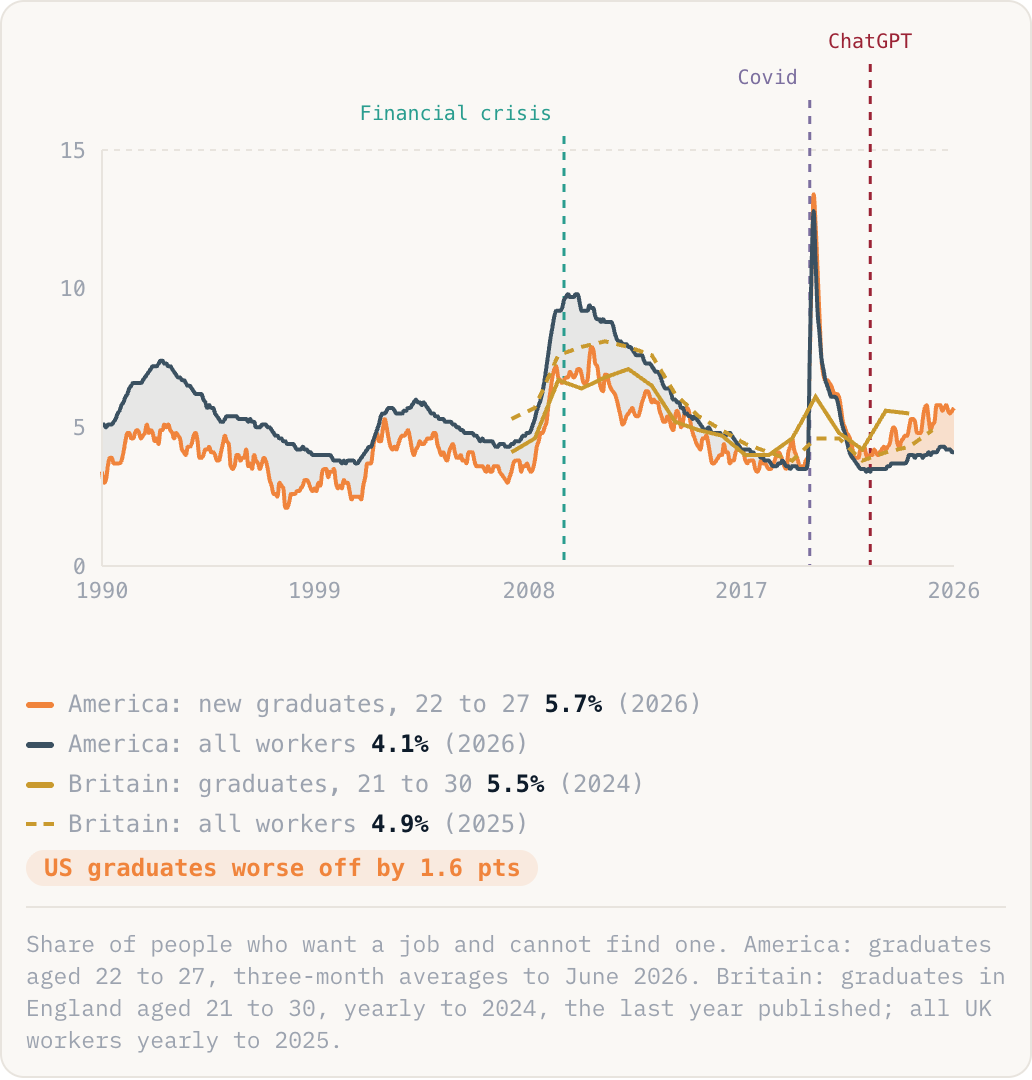
America: new graduates, 22 to 275.7%(2026)America: all workers4.1%(2026)Britain: graduates, 21 to 305.5%(2024)Britain: all workers4.9%(2025)US graduates worse off by 1.6 pts
Share of people who want a job and cannot find one. America: graduates aged 22 to 27, three-month averages to June 2026. Britain: graduates in England aged 21 to 30, yearly to 2024, the last year published; all UK workers yearly to 2025.
Why this is happening
- Firms have stopped hiring, not started firing. Each month only about 3.3% of American workers start a new job, the lowest rate since 2012. In Britain, job adverts for graduates are at their lowest for the time of year since 2020. People with a job keep it; those looking for their first are left outside.
- Computer jobs are hit hardest. Computer engineering graduates have 7.8% unemployment and computer science 7.0%, worse than art history (6.7%). Nursing (2.1%) and primary school teaching (1.2%), jobs that need someone in the room, are fine.
- AI is part of it, but not all. A Stanford study finds 22 to 25 year olds in the jobs most exposed to AI, like coding and customer service, now hold 19% fewer jobs than if those jobs had grown like the rest. New York Fed economists also blame remote work: firms that hire remotely prefer people with experience.
The take
A degree is still worth having: young people without one are more likely to be jobless (7.2% in America, 8.1% in Britain), and older graduates in America are at just 2.5%. What a degree no longer buys is a quick first job. That costs years, not months: people who start work in a weak job market earn less for about a decade, because the first job is where you learn the skills that get you the next one.