MacroSnaps4 November 2026
No. 116Indonesia has cleared an area of old-growth rainforest about the size of Iceland, and every hectare of it counted as growth.
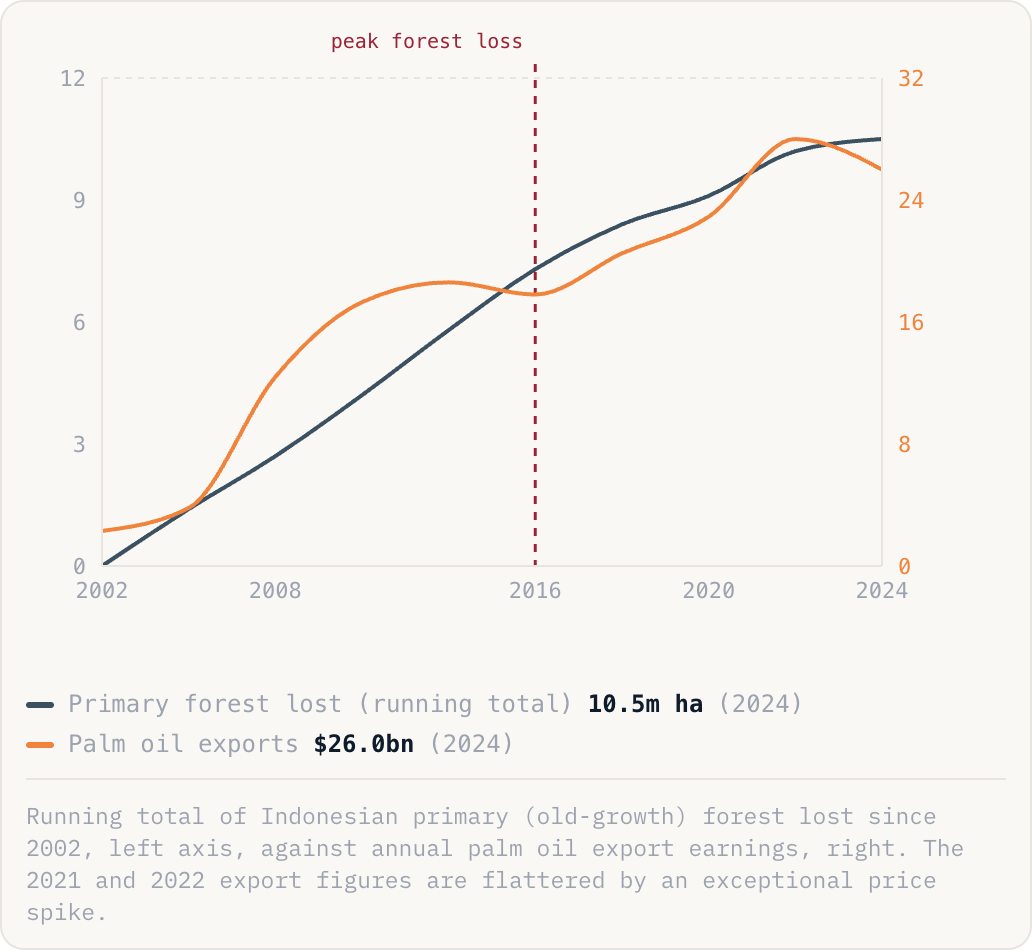
Primary forest lost (running total)10.5m ha(2024)Palm oil exports$26.0bn(2024)
Running total of Indonesian primary (old-growth) forest lost since 2002, left axis, against annual palm oil export earnings, right. The 2021 and 2022 export figures are flattered by an exceptional price spike.
Why this is happening
- GDP measures transactions, so it records the timber sold, the plantation planted, the oil exported and the wages paid. There is no line anywhere in the national accounts for the forest that no longer exists.
- The forest was doing valuable work that nobody paid for: storing carbon, generating rainfall for farms downwind, holding soil on hillsides, cooling the region and housing species with no market price. Because none of it was ever bought or sold, none of it was ever counted.
- This is not an argument that Indonesia got nothing. Palm oil lifted millions of smallholders out of poverty and is the highest-yielding oil crop on earth by a wide margin. It is an argument that the ledger only ever showed one side.
The take
A company that sold its factory and its machines would report a brilliant year of revenue and everybody would understand what had happened, because a company has a balance sheet as well as an income statement. Countries publish only the income statement. Until national accounts carry a natural-capital column, every country that runs down its natural wealth will look, in the only number anyone quotes, like it is doing well.