MacroSnaps19 July 2026
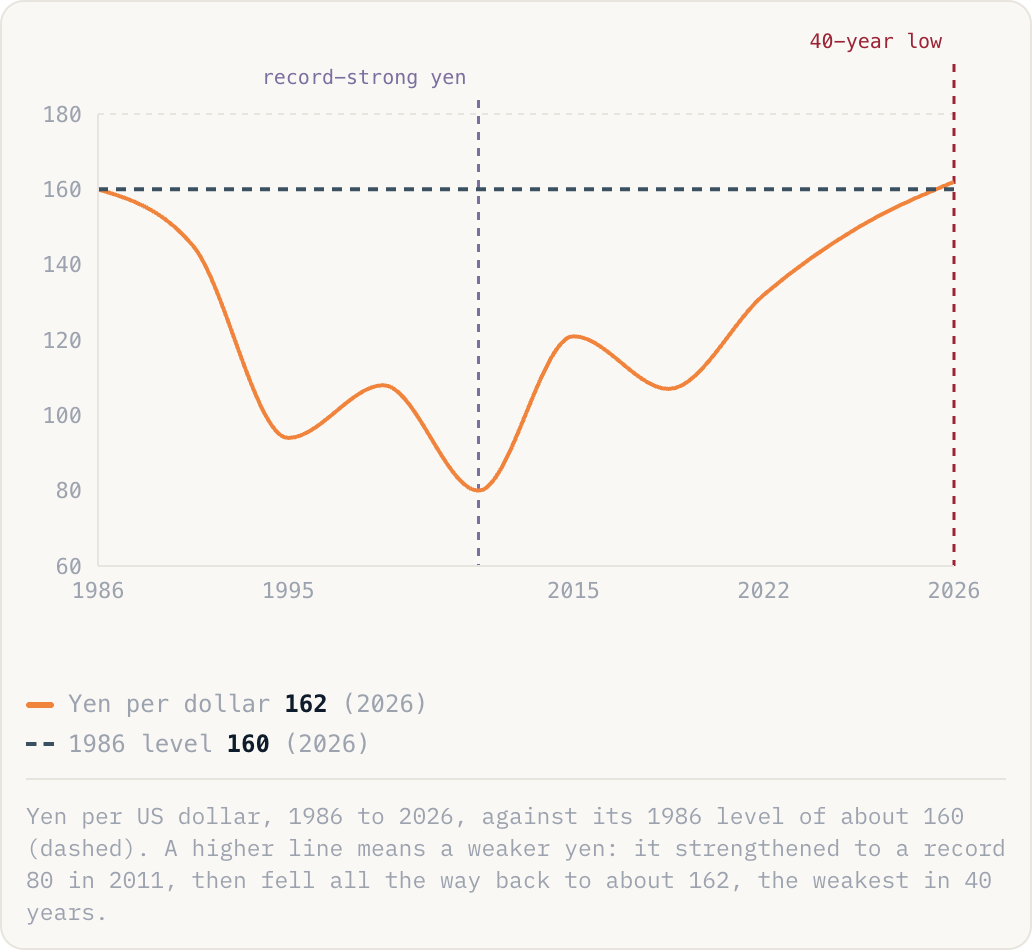
No. 14The Japanese yen just hit its weakest level against the dollar in 40 years.
Yen per dollar162(2026)1986 level160(2026)
Yen per US dollar, 1986 to 2026, against its 1986 level of about 160 (dashed). A higher line means a weaker yen: it strengthened to a record 80 in 2011, then fell all the way back to about 162, the weakest in 40 years.
Why this is happening
- For years the Bank of Japan held interest rates near zero to fight deflation, while the US Fed raised its rate toward 4%, so money floods to where it earns more, out of yen and into dollars.
- Even after the BOJ finally lifted rates to 1%, a 30-year high, the gap with the US stayed wide, so the pressure on the yen barely eased.
- Japan imports most of its energy and food, so a weak yen makes those costlier at home even as it flatters exporters and draws record tourism.
The take
A cheap yen is double-edged: a boon for Toyota and tourists, a tax on every Japanese household's groceries and fuel. And it is a global tripwire: the "carry trade" that borrows cheap yen to buy assets worldwide can unwind violently, as it did in 2024, jolting markets far from Tokyo.