MacroSnaps18 August 2026
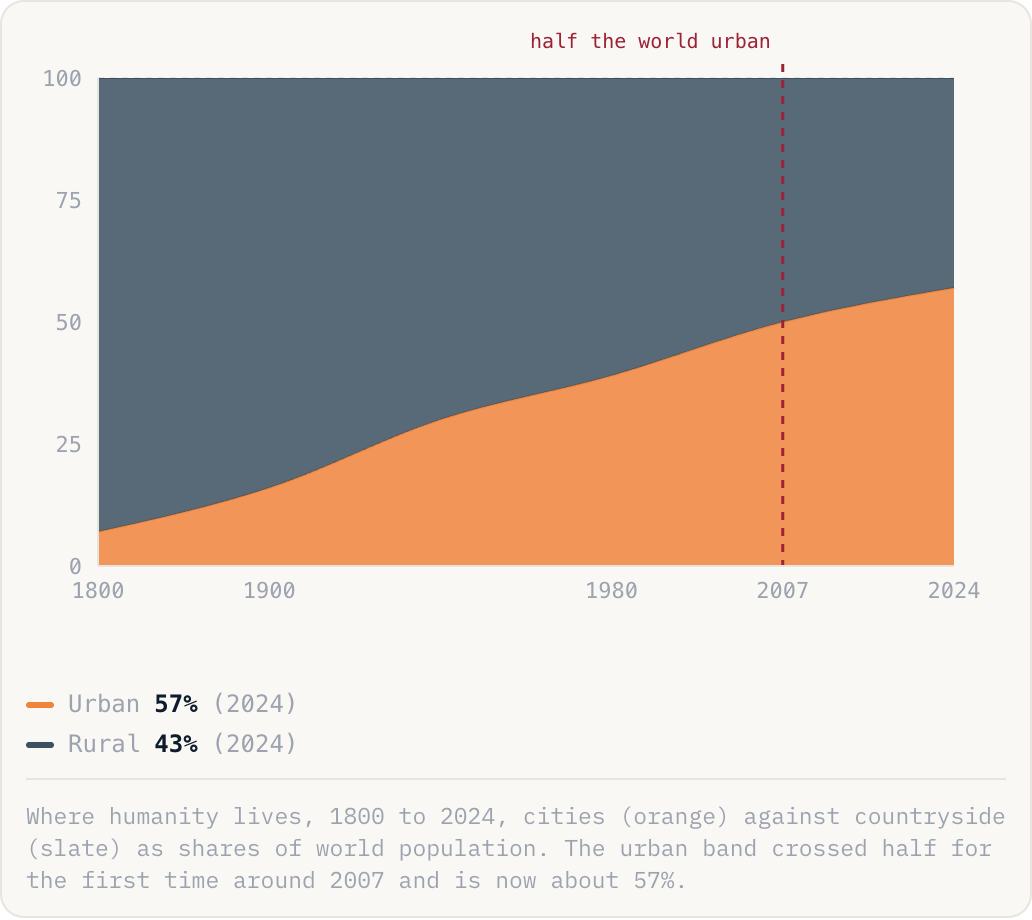
No. 38Around 2007 humanity became a mostly urban species for the first time.
Urban57%(2024)Rural43%(2024)
Where humanity lives, 1800 to 2024, cities (orange) against countryside (slate) as shares of world population. The urban band crossed half for the first time around 2007 and is now about 57%.
Why this is happening
- Mechanised farming meant far fewer hands were needed on the land, pushing people off it and into towns.
- Cities offered the factory and then the office jobs, the wages and the services that the countryside could not match, so people kept moving in.
- The shift is now fastest in Asia and Africa, where hundreds of millions are urbanising in a single generation.
The take
Cities are the engines of both growth and emissions: they generate most of world output and most of its carbon. This century's economic and climate story is being written in them.
Source: UN; Our World in Data (2024)