MacroSnaps27 August 2026
No. 47One in nine American adults is on a weight-loss drug, and obesity is falling for the first time on record.
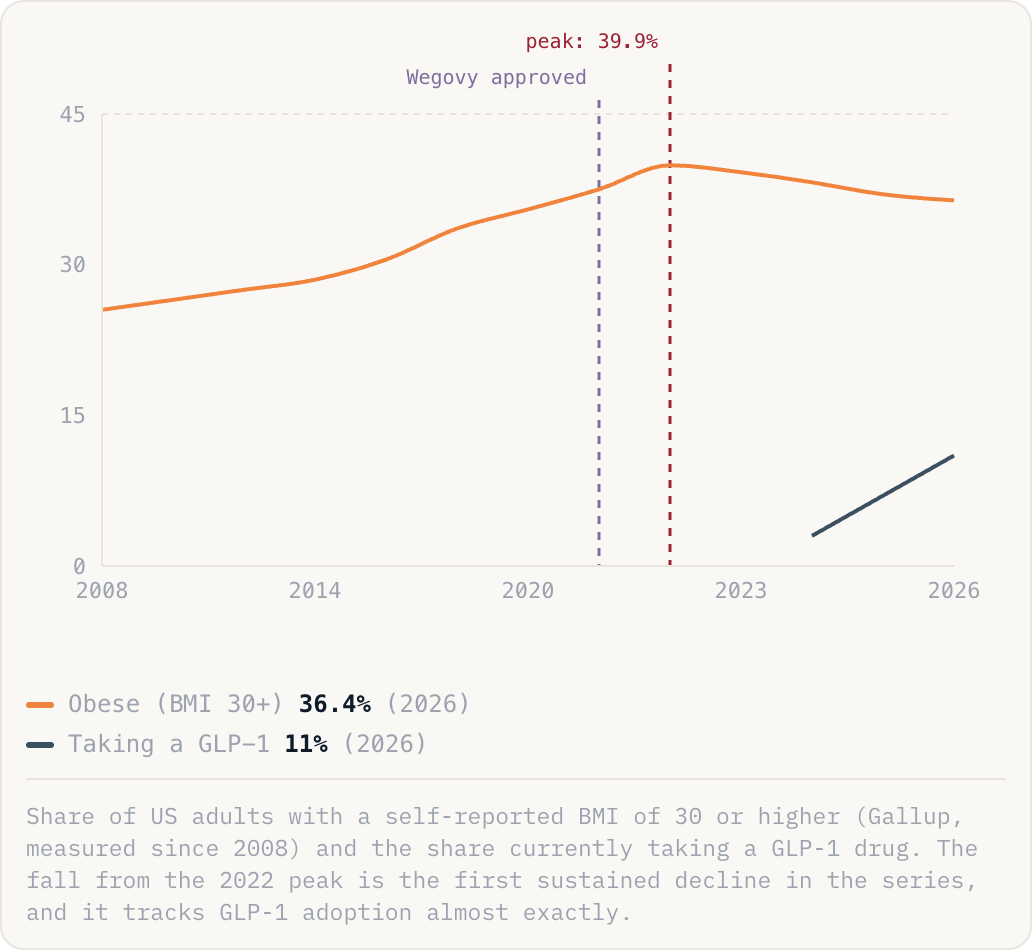
Obese (BMI 30+)36.4%(2026)Taking a GLP-111%(2026)
Share of US adults with a self-reported BMI of 30 or higher (Gallup, measured since 2008) and the share currently taking a GLP-1 drug. The fall from the 2022 peak is the first sustained decline in the series, and it tracks GLP-1 adoption almost exactly.
Why this is happening
- GLP-1 drugs (Ozempic and Wegovy from Novo Nordisk, Mounjaro and Zepbound from Eli Lilly) copy a gut hormone that tells the brain you are full. People on them simply stop wanting to eat as much, and in trials they lose 15 to 20% of their body weight, which no diet programme has ever achieved at scale.
- They began as diabetes drugs. Once Wegovy was approved for weight loss in 2021, telehealth prescribers and cheaper compounded copies spread them far beyond endocrinology clinics: 11% of adults are on one now, and 15% have tried one.
- Fifty years of diets, food pyramids and gym memberships never bent the national curve, because obesity was never mainly a willpower problem. It is biology, an appetite set too high for a world of cheap calories, and biology responds to medicine.
The take
For as long as obesity has been measured, the only direction was up; the arguments were about how fast. That era just ended, three years after one injection reached the market. The catch is the price of staying on the other side of the curve: at roughly $1,000 a month before discounts, half of users say the drugs are hard to afford, and the weight comes back when the injections stop. America is not ending obesity so much as renting its absence, one month at a time.