Japan has just raised its interest rate to a 31-year high. It is 1.25%.
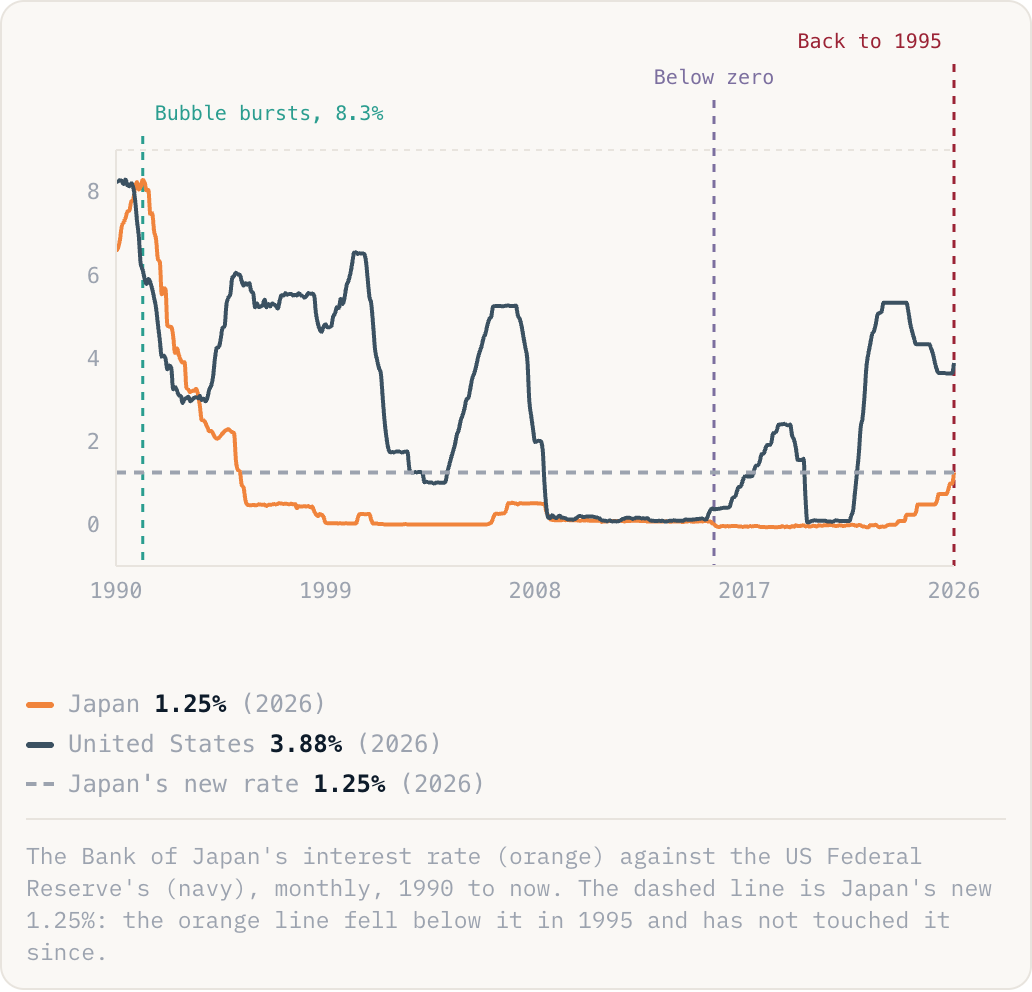
The Bank of Japan's interest rate (orange) against the US Federal Reserve's (navy), monthly, 1990 to now. The dashed line is Japan's new 1.25%: the orange line fell below it in 1995 and has not touched it since.
- Prices in Japan are rising, which for Japan is news. It spent around three decades with prices flat or falling, so shops and employers got used to never changing a number. The measure the central bank watches was rising at 1.7% a year in August, just under the 2% it aims for.
- The currency keeps sinking. The yen hit a 40-year low against the dollar in August, and Tokyo and Washington stepped into the market together to stop the slide, their first joint effort since 2011. A higher interest rate makes holding yen more attractive. The US Treasury Secretary, Scott Bessent, has taken to telling Japan's central bank governor in public to "do the right thing".
- Energy is the third push. The war with Iran has disrupted shipping through the Strait of Hormuz and driven up oil and gas prices worldwide. Japan buys nearly all of its energy from abroad, much of it from the Middle East, so those prices arrive in Japanese shops fast.
Japan was the world's cheap money shop. In 31 years its interest rate never once reached 1%, and for 25 of them it never left a band 0.6 of a point wide, less than the Fed moved in a single day in March 2020. Anyone could borrow yen for almost nothing and buy something better paid elsewhere, which quietly financed bets all over the world. That trade is over. The bigger bill is at home: the government owes about two and a half times what the country makes in a year, and behind it is a generation that has never paid real interest on anything.