MacroSnaps17 September 2026
No. 68The US Federal Reserve has raised interest rates for the first time in three years. The man who did it was chosen by Trump to cut them.
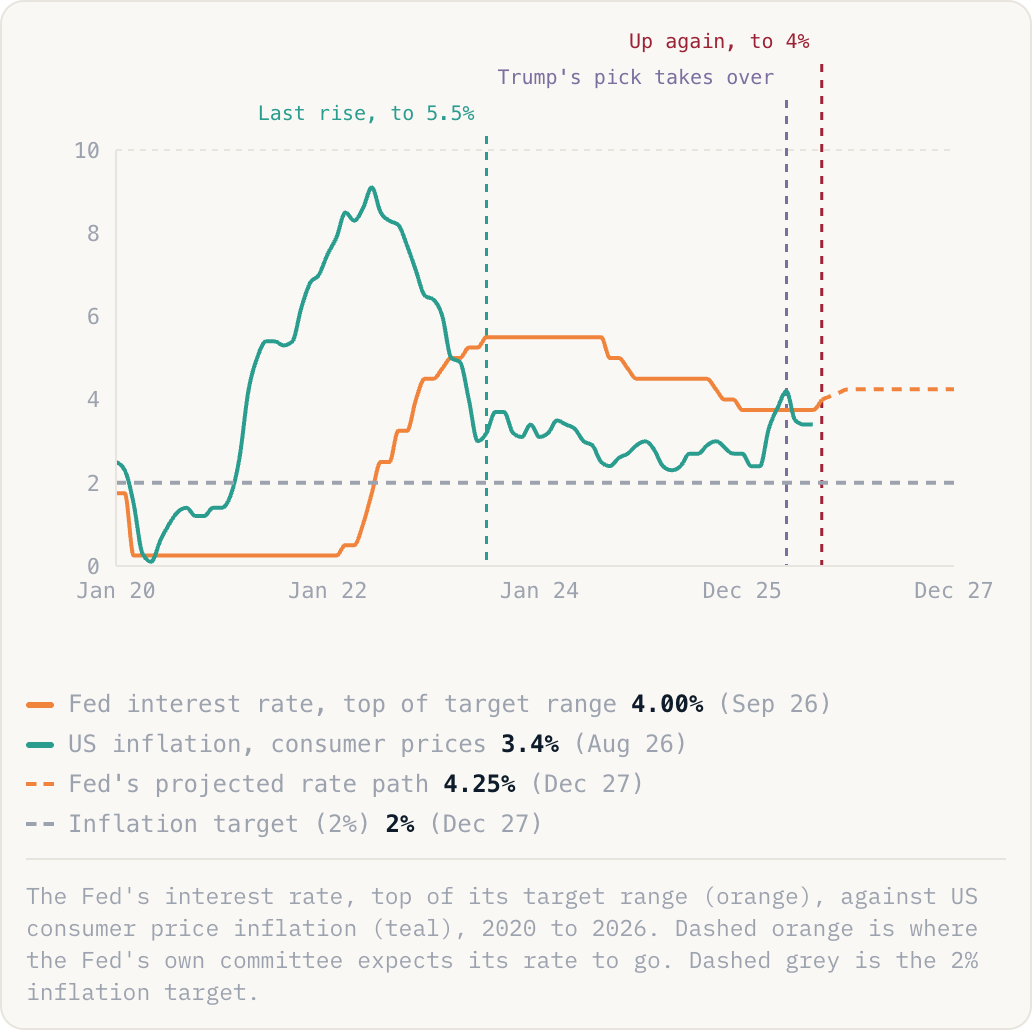
Fed interest rate, top of target range4.00%(Sep 26)US inflation, consumer prices3.4%(Aug 26)Fed's projected rate path4.25%(Dec 27)Inflation target (2%)2%(Dec 27)
The Fed's interest rate, top of its target range (orange), against US consumer price inflation (teal), 2020 to 2026. Dashed orange is where the Fed's own committee expects its rate to go. Dashed grey is the 2% inflation target.
Why this is happening
- Prices are rising 3.4% a year, above the Fed's 2% target for a fifth year running. Oil is near $109 a barrel because of the war with Iran and diesel has never cost more. Warsh, on the day: "The plain fact is that inflation is too high and has been for too long."
- The economy can take it. Unemployment is 4.1%, spending has held up and investment in AI data centres is booming. The Fed said growth is solid, so it chose to lean on prices. All 12 members voted for the rise.
- More is coming. The committee's forecasts pencil in another quarter point rise by December and no cut before 2028, which is the dashed line. Its next meeting ends on 28 October, six days before the midterm elections.
The take
Trump chose Kevin Warsh in January and said he would not have picked him if he wanted rate rises. On 4 September he said rates should be 1% or half a percent. Warsh raised them anyway and, asked about Trump, said only that "independence is a two-way street" and that trade and fiscal policy should "stay in their lane too". George Bush senior reappointed Alan Greenspan, lost in 1992, and said: "I reappointed him and he disappointed me."