MacroSnaps12 September 2026
No. 63146 countries are working on digital cash: money held at the central bank, not at your bank. Three have launched it. America has banned it.
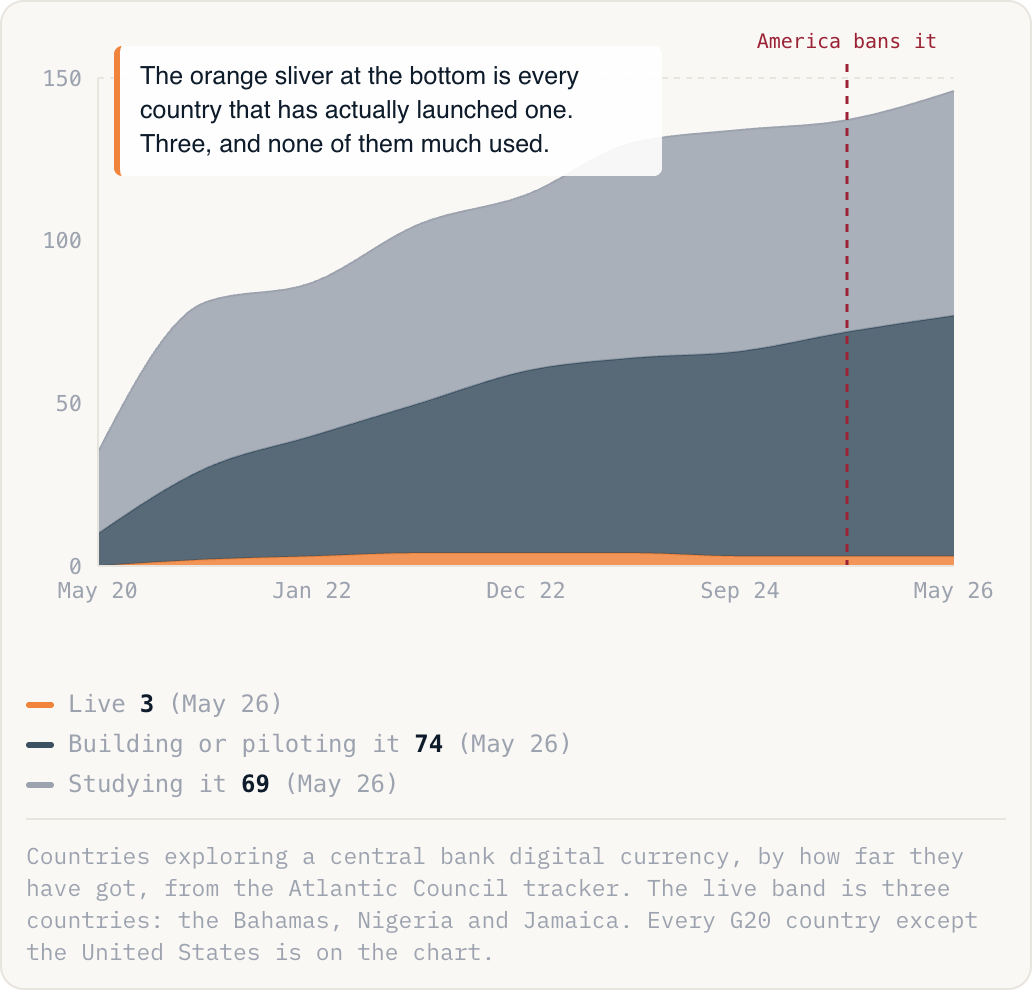
The orange sliver at the bottom is every country that has actually launched one. Three, and none of them much used.
Live3(May 26)Building or piloting it74(May 26)Studying it69(May 26)
Countries exploring a central bank digital currency, by how far they have got, from the Atlantic Council tracker. The live band is three countries: the Bahamas, Nigeria and Jamaica. Every G20 country except the United States is on the chart.
Why this is happening
- Today pounds come two ways: notes and coin from the Bank of England, or a bank account, which is a promise from your bank. Digital cash would be a third: a balance at the central bank, in an app, that no bank failure can touch.
- Every pound moved into digital cash leaves a bank deposit, the cheap funding banks lend out, and in a panic it could leave with a tap. So the plans cap holdings, £10,000 to £20,000 in Britain and about €3,000 in the euro area, and pay no interest. The caps are the banks' win.
- Cash leaves no record; state digital money could. So in January 2025 President Trump banned a digital dollar by executive order. America is backing stablecoins instead: digital dollars issued by private companies such as Tether and Circle, each backed by a real dollar held in reserve, which Congress made legal in July 2025.
The take
The fight is over who issues the money you use every day: the state, the banks, or private companies. So far the banks are winning. Europe plans to cap digital euros at about €3,000 and pay no interest. China in January turned its digital yuan into a bank deposit that pays interest. America chose private stablecoins. And where digital cash exists, almost nobody uses it: Nigeria's eNaira is 0.37% of its currency.
Source: Atlantic Council CBDC Tracker (May 2026)